
In 2020, the devastating explosion of an improperly stored ammonium nitrate stockpile in Beirut claimed more than 200 lives and injured thousands more. The tragedy highlighted the catastrophic consequences of unidentified or forgotten hazardous materials. Unfortunately, incidents involving unknown chemicals continue to pose significant risks to emergency responders, defence personnel, and the public around the world.
In response to this ongoing challenge, an Australian Federal Government agency engaged us to develop a portable sensing system capable of rapidly detecting and identifying hazardous chemicals in the field. The project demanded a solution that combined laboratory-grade performance with the robustness and practicality required for real-world deployment.
The key performance requirements included:
Unambiguous material identification in real time
Non-contact detection, eliminating the need for sampling or direct interaction with suspect materials
A portable, field-deployable system suitable for operation in challenging environments
Eye-safe operation, enabling safe use in populated or public areas
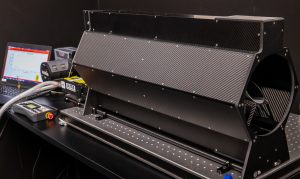
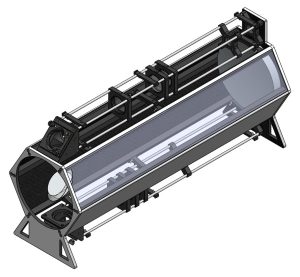
To meet these requirements, we designed and developed a rugged laser spectroscopic sensing platform capable of identifying hazardous materials at standoff distances exceeding 10 metres in less than one second, while maintaining reliable performance across a wide range of environmental conditions.
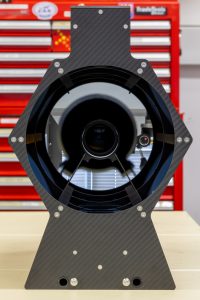
A key innovation of the system was the development of a novel confocal optical architecture. The design maximised the collection efficiency of the weak optical signals returned from targets illuminated with eye-safe laser power levels. This enabled highly accurate material identification without compromising operator or public safety.
The result was a compact, high-performance sensing platform that combined rapid, stand-off chemical identification with safe operation in real-world environments—demonstrating how bespoke optical engineering can solve complex sensing challenges where speed, accuracy, and safety are critical.